
The History of Nanobubble Technology: From scientific curiosity to the real-world application we see today

Nanobubble technology may feel like a recent innovation, but its origins stretch back decades. What started as a scientific curiosity has evolved into a powerful tool now being used across industries, including agriculture, water treatment, and beyond.
Understanding the history of nanobubbles helps explain why this technology is now gaining traction and how it has reached the point where it can deliver real world results for farmers and growers today.
Early theories: the science of bubbles (1950s - 1980s)
The story of nanobubbles begins with the broader study of bubbles in liquids.
In the 1950s, scientists developed foundational theories describing how gas bubbles behave and dissolve in liquids, particularly through diffusion and surface tension effects (Source: ScienceDirect – A review and perspective on micro and nanobubbles: What They Are and Why They Matter).
At the time, these theories suggested that very small bubbles should be extremely unstable, dissolving almost instantly due to internal pressure. This led many researchers to assume that nanobubbles could not exist in a stable form.
Discovery and debate: Do nanobubbles really exist? (1980s - 2000s)
In the 1980s, early experimental observations began to challenge this assumption. Researchers reported evidence of extremely small bubbles (later termed nanobubbles) existing in water.
Further studies in the 1990s suggested that nanobubbles could form on surfaces under certain conditions, sparking debate within the scientific community about their stability and behaviour.
For years, nanobubbles were considered somewhat of a paradox:
Theory suggested they should disappear instantly
Experiments showed they could persist
This gap between theory and observation became a key focus of research.
By the early 2000s, advances in imaging and measurement techniques allowed scientists to confirm the existence of stable nanobubbles more clearly (Source: ScienceDirect – Advances in nanobubble generation and applications in environmental engineering).
Researchers also began developing methods to reliably generate nanobubbles, including:
Hydrodynamic cavitation
Electrochemical processes
Pressure-based systems.
At the same time, studies began to reveal their unique properties, including:
Long stability in water
High internal pressure
Large surface area
Ability to generate reactive oxygen species.
These characteristics set nanobubbles apart from traditional aeration methods.
Early applications: from aquaculture to water treatment
Before agriculture, nanobubbles found early success in industries where water quality is critical. Applications included:
Aquaculture, where increased dissolved oxygen improved fish health
Wastewater treatment, improving oxygen transfer and reducing energy use
Industrial cleaning and oxidation processes.
These early use cases demonstrated that nanobubbles could:
Improve oxygen availability
Enhance biological processes
Reduce reliance on chemicals.
Commercialisation: from research to real world use
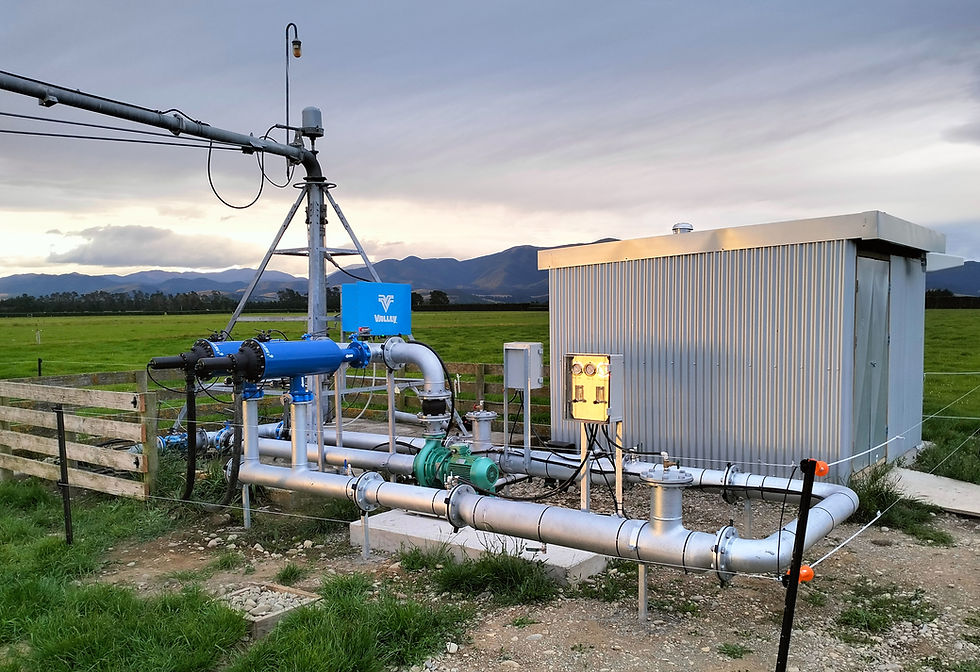
Nanobubble technology first gained significant commercial traction in Japan, where it was applied across aquaculture, agriculture, and industrial processes. From there, the technology has continued to evolve, with improvements in system design, scalability, and reliability enabling its use in larger, real-world applications.
In recent years, nanobubble systems have begun to be applied in commercial horticultural settings, including orchard systems overseas. Trials in almond orchards have demonstrated improvements in soil infiltration, nutrient uptake, and crop quality when using nanobubble-treated irrigation water, highlighting the potential for this technology to support more efficient and productive growing systems (Source: ScienceDirect – Advances in nanobubble applications in agriculture).
Nanobubbles in agriculture today
Today, nanobubble technology is being used in agriculture and horticulture to:
Improve root zone oxygen availability
Enhance nutrient uptake
Support plant health and resilience
Improve water use efficiency.
By delivering oxygen directly through irrigation systems, nanobubbles offer a fundamentally different approach to improving growing conditions.

Why it’s so relevant
After decades of research, nanobubbles have moved from theory to practical application.
As farmers face increasing pressure around water use, input costs, and environmental sustainability, technologies that improve the performance of existing systems (rather than requiring entirely new infrastructure) are becoming increasingly valuable.
Looking ahead
The journey of nanobubble technology is still evolving.
As research continues and adoption grows, the focus is shifting from “what are nanobubbles?” to “how can they be applied to deliver better outcomes?”
For growers, this means access to a tool that has been:
Scientifically validated
Technologically refined
Proven across multiple industries.
Want to see how nanobubbles are being applied on farm?
Explore real-world case studies:https://www.nanobubbleagritech.com/casestudies
Here are some other useful links:
Check out our website for more about Nanobubble Agritech: About Nanobubble Agritech | Innovating Smarter Irrigation Solutions
Download this free e-book: Supercharging Irrigation Profitability
Talk to the Nanobubble Agritech team about what’s possible: https://www.nanobubbleagritech.com/contact


Comments